

Step inside the newly refreshed Moxy Banff and you’ll find the playful spirit of the ‘60s Voyager Inn reborn with bold personality and Rocky Mountain edge. Rooted in wildlife, scenery, and regional culture, the art and design strike a balance between Moxy’s unapologetic energy and Banff’s natural heartbeat. We sat down with Andrew Kline of Workshop/APD dives into the creative vision behind it all.
Tell us about Workshop/APD’s design philosophy and how it came to life through the vision for Moxy Banff.
At every scale, Workshop/APD’s philosophy centers on highly customized, contextual design. Each project is tailored to the people who will inhabit or experience it, the place it is located, and its purpose. Craft is at the heart of everything we do, elevating modern design and giving it soul. I think that Workshop’s aesthetic is literally rooted in early American modernism—you look at so many iconic spaces and they are exceptionally modern but also layered and crafted—everything was still made by hand.
At Moxy Banff, our conceptual lens was rooted in the project’s constants: the locale—Banff being such a unique place—the amazing existing building we wanted to pay homage to, and Moxy as a brand. In Banff, there’s a common ski lodge aesthetic and we knew that, thanks to the existing midcentury building, we could create something unique that was still very true to the place and its history.
As Principal, how did you help lead the project vision? What perspective did you hope to bring to the property?
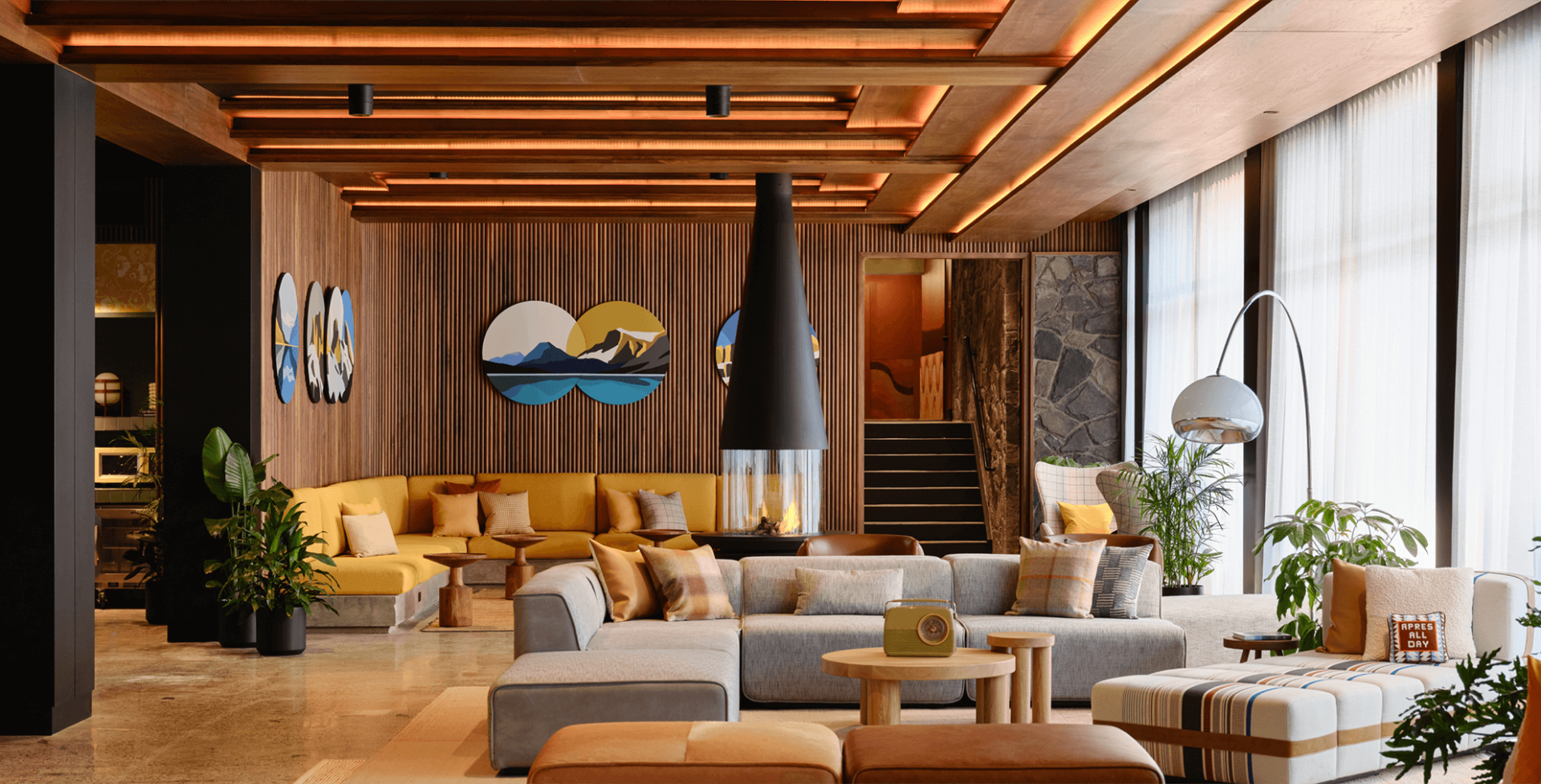
I helped to develop the project’s conceptual narrative, and I also sketched a lot on the space planning very early on, so that we could utilize the existing building in the most beneficial way. We were faced with a really expansive public space that had been broken up into a restaurant, a bar, reception, and believe it or not, a liquor store. We took that and blew it all out out to become this incredible, open common space. We wanted this project to feel vibrant, fresh, and fun, with engaging spaces that guests would want to gather in.
This was the first Moxy to be built outside of an urban environment, so we thought a lot about how to take a brand with urban roots and bring it to a natural place like Banff. This included mixing in black accents and more vintage and mid‑century industrial elements.
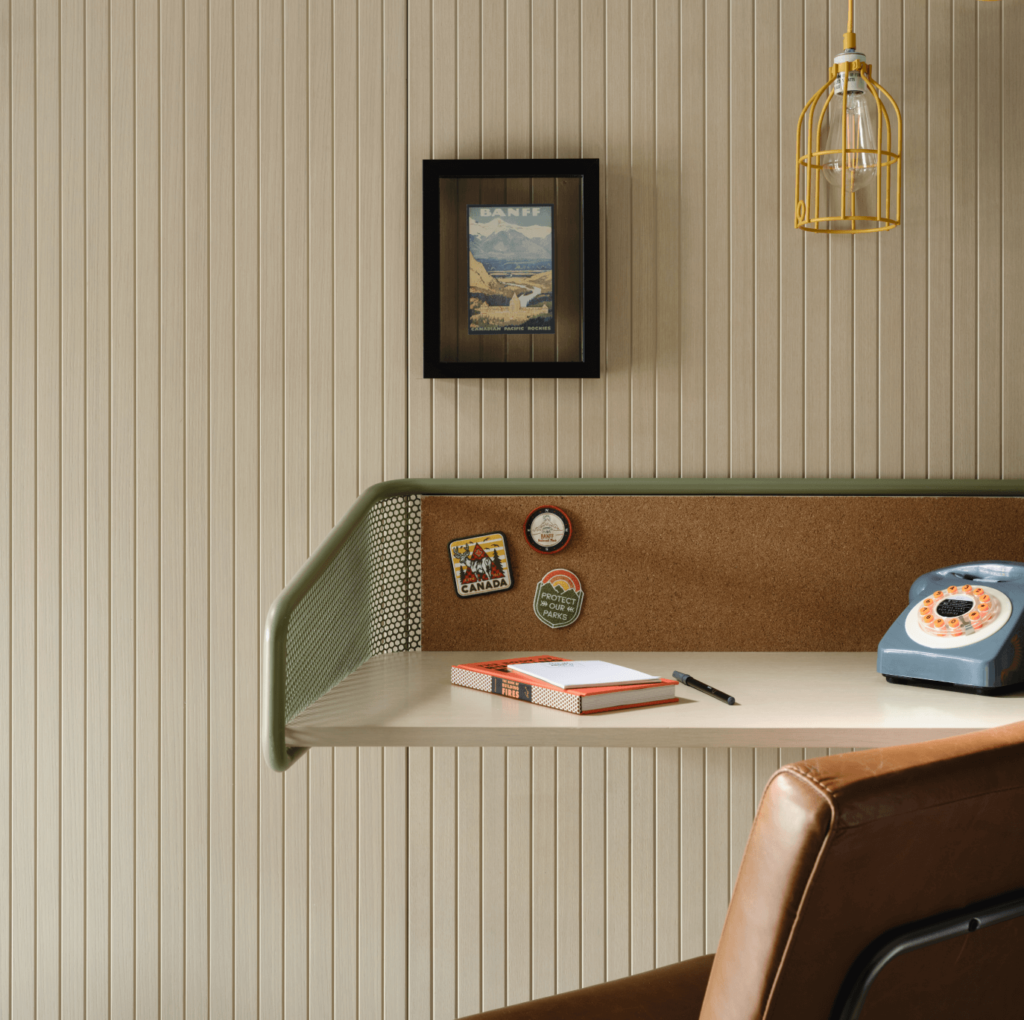
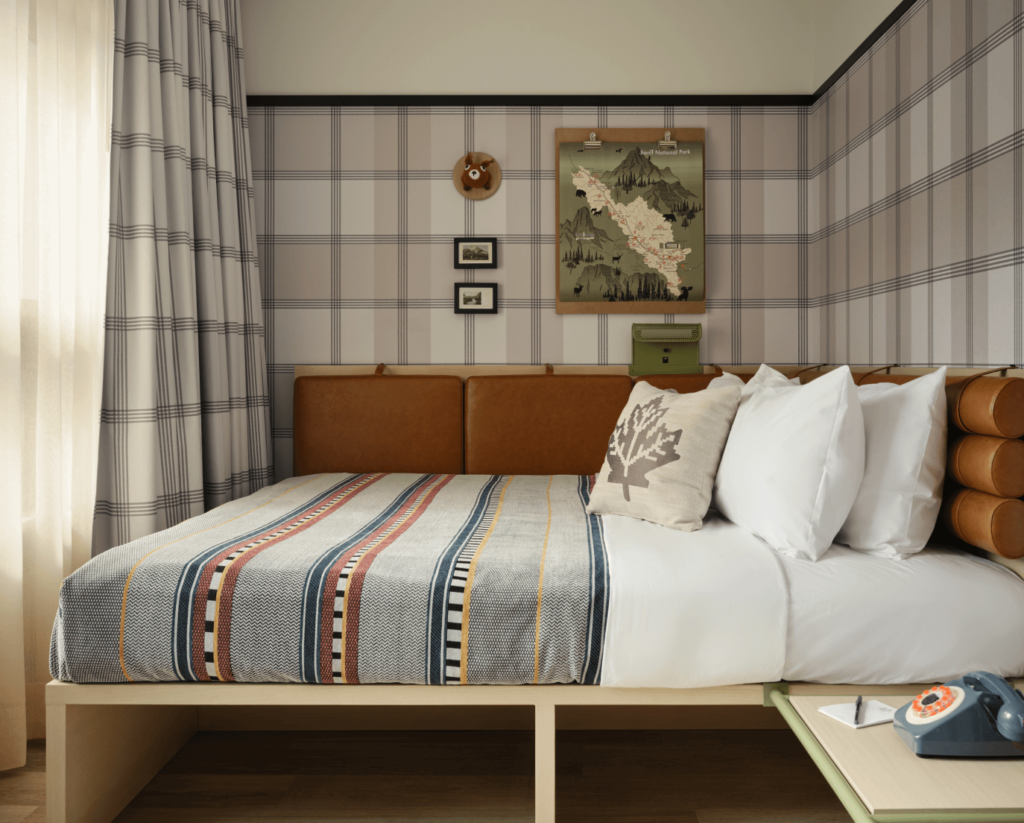
We created a completely new room that fit this narrative, but it still has telltale Moxy elements—the furniture‑like vanity outside the bathroom, the peg wall that goes all the way around the room, room layouts with bunk beds or toe‑to‑toe twin beds, and iconic pieces like the Moxy stool, customized to match the project’s palette.
You’ve often said the built environment can be a catalyst for connection. How does Moxy Banff embody that idea?
In hospitality, it’s nice for guests to be able to enjoy a range of experiences. Some people enjoy connecting not only with their travel companions while others prefer a more solitary experience where they can disconnect. Now that the lobby spaces have been unified, it’s large and open enough to support a number of distinct—but visually connected—zones so guests can also find their own space and be alone together. The lobby and bar are very multi-functional, so guests naturally engage with them in a number of different ways, and even those more solitary guests can enjoy the scene and the vibe without actively participating in it, if they choose.
This project transformed the original Voyager Inn into something bold and new. How did you approach honoring its history while introducing Moxy’s distinctive personality?
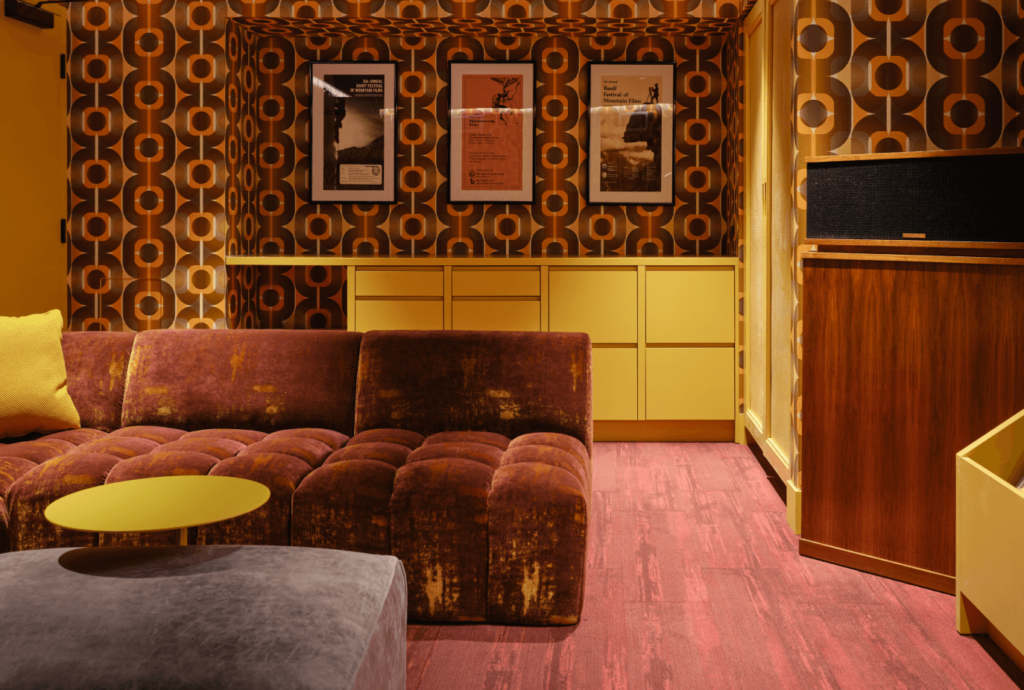
We wanted to pay homage to the existing building on the interior and make sure that both felt historically accurate, then bring Moxy in thoughtfully. Because of the building’s mid-century roots, we were drawn to this bold, warm color palette of russet, gold, red, and brown for the public spaces, and a cooler, but still cozy palette for the guest rooms. As a brand, Moxy has a really unique and distinctive spirit, and our clients were excited to source and feature unique vintage elements like the VW bus that serves as a snack bar in the lobby. There’s a playfulness here that’s also reflected in the artworks KBAA helped to curate, and a level of customization that makes the property so special.
Workshop/APD is known for developing designs around a strong conceptual narrative. What was the guiding narrative here, and how did it drive decisions from site to space to artwork?
The conceptual lens for this was rooted in the constants of the project: Banff as a place, the amazing building we wanted to honor, and Moxy. We spent time there in the beginning to get that right.
From your perspective, why is having an art advisory team like KBAA important to enhancing the design experience?
For a hospitality project to be successful, I believe the art concept has to be closely tied to the interior design concept. Otherwise you lose the thread or feel a dissonance in the space. In hospitality, we view all design decisions through that original conceptual lens in order to transport guests, and the artwork should reflect that same goal.
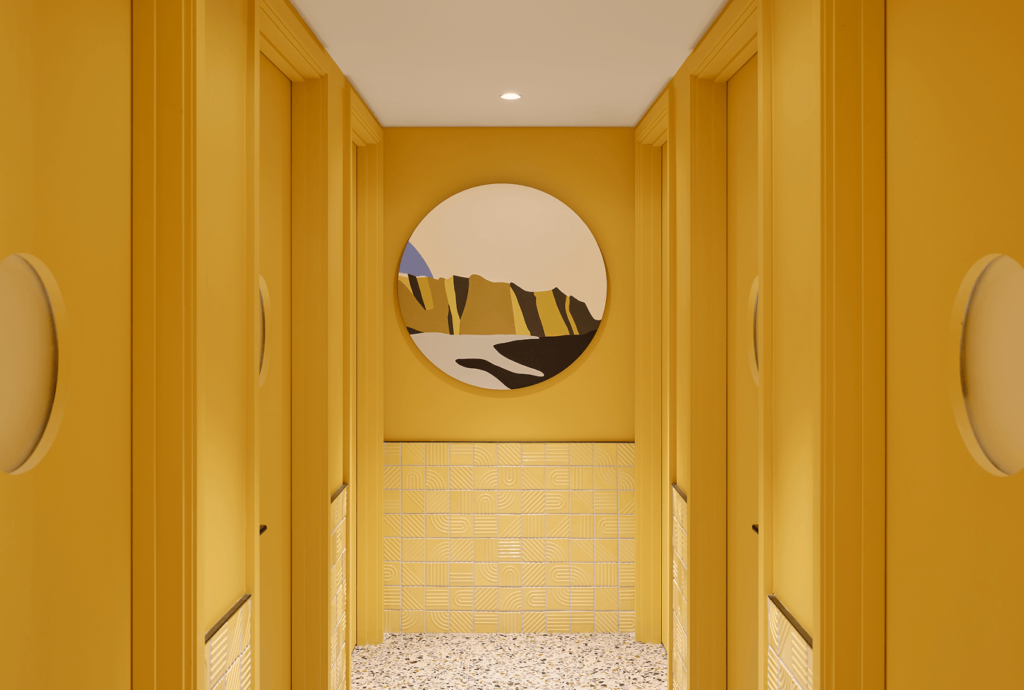
You can see this immediately in the Moxy Banff lobby—those round paintings are of areas in Banff, and having artwork of places like Lake Louise and the ski slopes was really important. Commissioning pieces allows us to honor local artists, create something that feels cohesive, and stylistically the space feels modern.
KBAA’s art program leaned into bold, nostalgic, and sometimes interactive elements. How did those choices layer into your architectural and interior design vision?
We put together an art concept tied closely to our narrative, and the Kevin Barry team presented artists who followed that same ethos, and the project’s bold spirit. To perfect this we went through a number of rounds of options, honing and perfecting the curation with a focus on bespoke pieces, local artists, and a retro color palette to match the interiors. There’s a really nice balance between these more vintage elements and a modern spirit that carries across the property.
What was the creative process like working with KBAA on this project? How did our teams collaborate to bring the vision to life?
It’s always a pleasure working with the KBAA team—they are extremely collaborative and have amazing ideas and resources. To ensure that this property felt unique, they sourced artists based on our narrative, and then we commissioned custom pieces with those artists. The team was extremely open to collaboration and took tons of feedback, creating a seamless process for everyone involved.
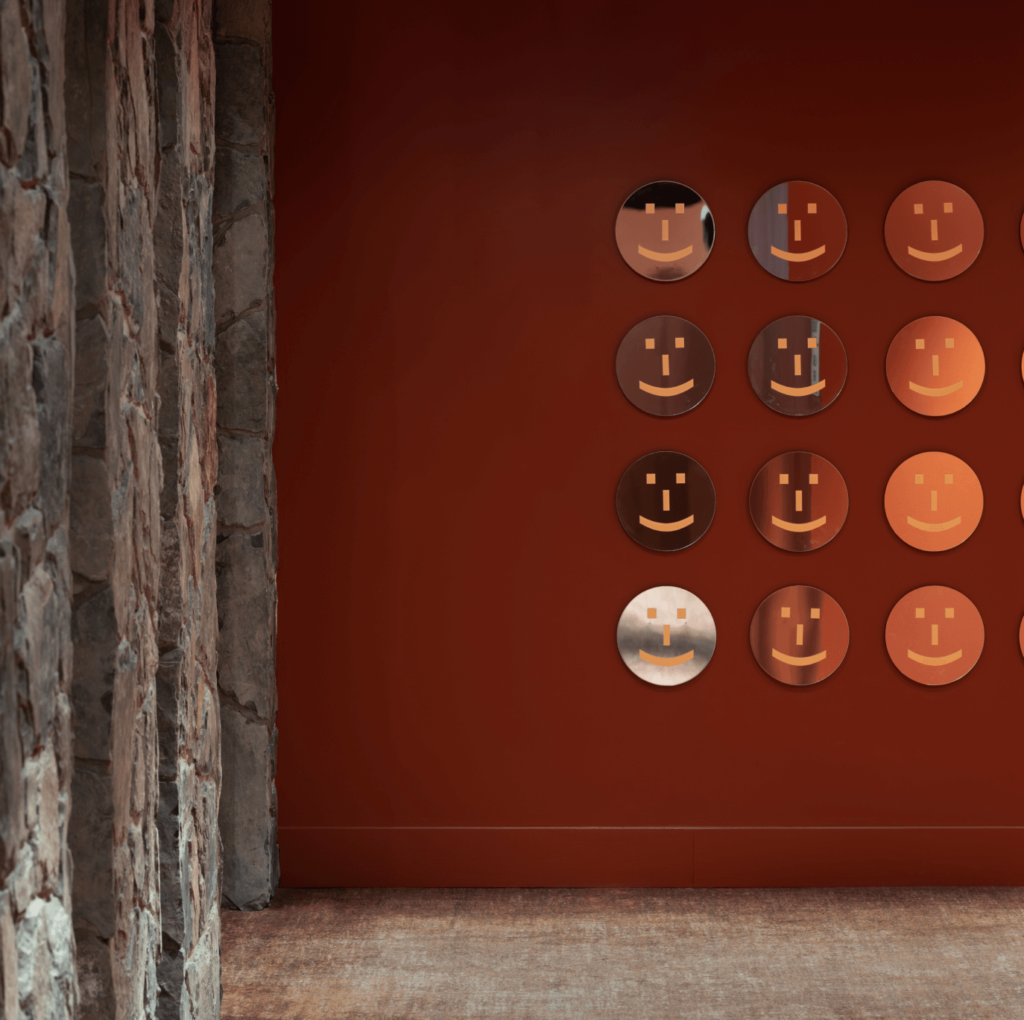
The property features work from local artists alongside vintage archival pieces. How did incorporating local voices and regional history shape the guest experience?
When you take time to incorporate custom pieces, invite an artist you’re passionate about to create murals, or work back and forth finding vintage pieces, it’s so much more layered—it’s almost a residential approach to an art package. I think this project broke the ‘bad hospitality artwork’ rules in so many ways, and helped make Moxy Banff feel eclectic and collected.
In your view, how do design and art work together to create a sense of discovery and playfulness for guests?
Those round pieces above the built‑in sofas are a great example. They pull together all the elements in the room—the color, the very flat, modern, graphic quality—and they bring in the nature of Banff. They’re bold, vibrant, and transport the viewer into the narrative we’ve created.
Our latest issue of ELEVATE was about Spellbound Spaces. What design choices at Moxy Banff most embody that kind of experience?
Definitely the lobby and bar space. It’s a great place to connect, but it’s big enough and broken up enough that you can also find your own space and be alone together. But more importantly, every single element is meant to be transportative, there’s no disruption in the narrative. When you arrive at night and pull past the building to the parkade, the two fireplaces are blaring. You see the roaring fires on either side of the lobby in the front windows. It’s super cozy, it pulls you in from the outside, and once you enter you are enveloped in those cozy colors, textures, vintage and custom furnishings, it all just comes together to make guests feel like they are experiencing something special.
Banff is a truly magical place. Beyond this project, describe a Spellbound Space you’ve experienced in your life, and what made it unforgettable?
I recently took a trip to Japan for my 40th birthday, and spellbound is a perfect way to describe the modern Japanese onsen experience. Spaces that allow for introspection and relaxation feel especially enchanted to me.
Looking back, are you proud of the results at Moxy Banff? What do you hope guests feel or remember when they leave the property?
I’m so proud of Moxy Banff. Our team, KBAA, the clients, all bought into the concept whole-heartedly and we’ve created a property that’s already beloved by guests.
For more about our work on Moxy Banff, view the latest ELEVATE by KBAA. Thanks again to Andew Kline for his thoughtful answers, it’s always a pleasure connecting with our design partners!